Case Study - Infrastructure, Inequality, and Circular Alternatives in Beirut
Long-term ethnographic research mapping how residents and community organizations build circular alternatives to failing infrastructure systems, producing design guidance that helps architects and planners site buildings, allocate space, and support existing resilience networks rather than importing isolated centralized solutions.
- Client
- University of Arizona (PhD Research) & Recycle Lebanon
- Service
- Ethnographic Research, Infrastructure Use Analysis, Circular Economy Mapping, Design Anthropology Advisory
- Location
- Beirut, Lebanon
- Date
- 2016–2023
Overview
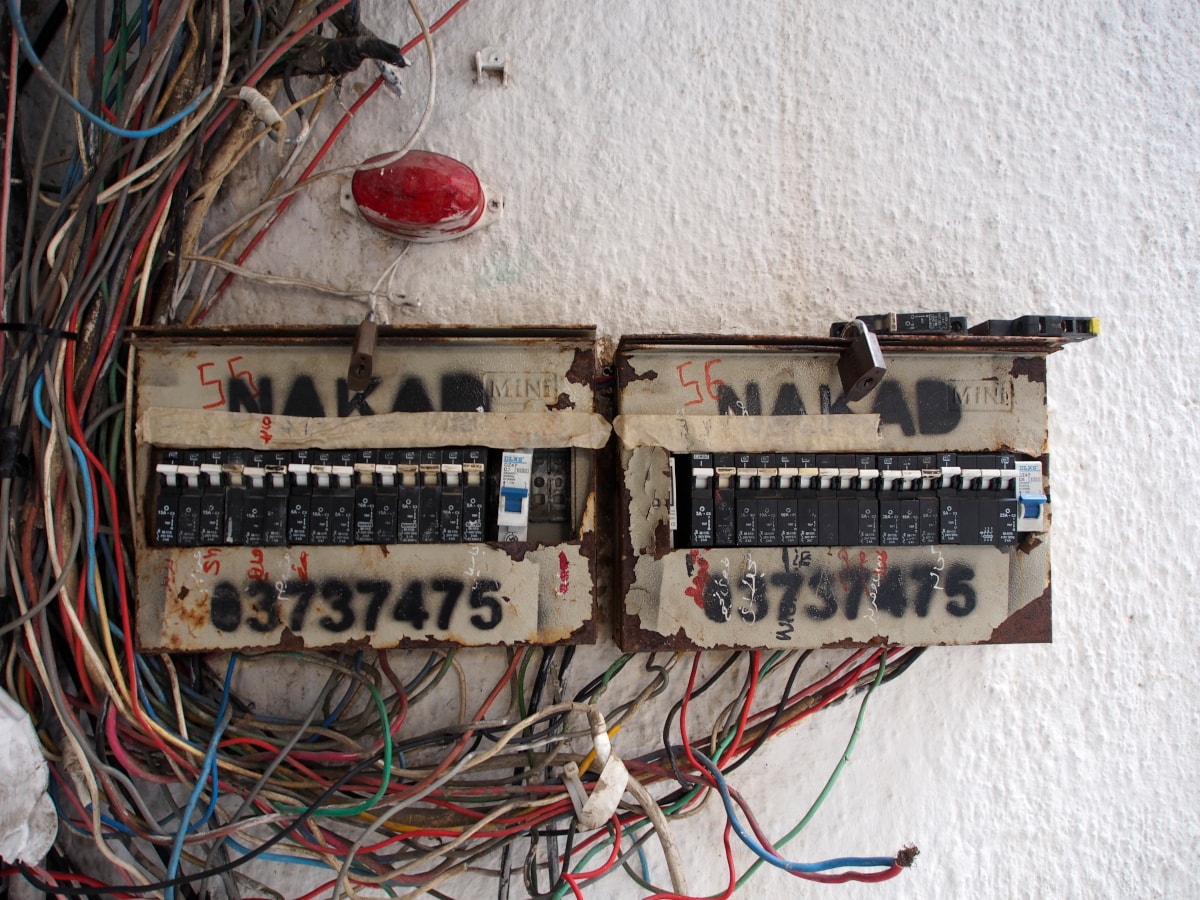
Beirut’s infrastructures—electricity, water, waste, transportation—are unreliable and politicized, forcing residents and organizations to constantly improvise. Over several years of ethnographic research, Rachel examined how people live within these failures and how community groups and social enterprises build circular alternatives that partially replace or supplement formal systems.
This work culminated in a circular economy publication that documents successful, locally rooted initiatives and translates them into design-relevant insights for architects, planners, and institutional clients working in similarly fragmented contexts.
The Challenge
Conventional infrastructure and building projects in Beirut often treat infrastructure as a purely technical system to be fixed or centralized, ignoring the dense web of informal and community-based solutions that already keep neighborhoods functioning.
Key questions included:
- How do residents and organizations practically secure energy, water, and waste services when formal systems fail?
- Where have these improvisations stabilized into viable circular practices (recycling, repair, reuse, shared infrastructure)?
- What spatial and organizational conditions allow these alternatives to succeed—and how can design actively support them?
Approach
Phase 1: Ethnography of Everyday Infrastructure
- Conducted long-term ethnographic fieldwork in Beirut, using participant observation, in-depth interviews, and walking routes with residents, business owners, and activists navigating ongoing infrastructure crises.
- Documented how resources were repurposed and designed to serve new purposes and technical systems.
- Analyzed how these practices were shaped by class, neighborhood, and histories of violence, and where they evolved from ad hoc workarounds into more organized systems.
Phase 2: Mapping Circular Alternatives with Recycle Lebanon
- Partnered with Recycle Lebanon on "Regenerate Hub," mapping environmental harms and circular economy initiatives across Lebanon and the wider MENA region.
- Identified and profiled social enterprises, neighborhood projects, and grassroots initiatives that turned waste streams and infrastructural gaps into opportunities for reuse, repair, and shared infrastructure.
- Tracked the spatial patterns of these initiatives—where they were located, what kinds of spaces they needed, and how they interfaced with surrounding housing, streets, and public facilities.
Phase 3: Circular Economy Publication & Design Translation
- Co-developed a circular economy publication and associated dataset that synthesizes this research into an accessible map of successful alternatives, organized by sector (e.g., waste, textiles, food) and by spatial typology (e.g., micro-hubs, neighborhood depots, regional facilities).
- Extracted design-relevant principles:
- Where buildings and public spaces can host or connect to circular initiatives.
- How to allocate program and square footage for shared infrastructure (collection points, sorting spaces, workshops).
- How to design thresholds, access, and visibility so community-led initiatives are supported rather than pushed to the margins.
- Translated findings into concise guidance for architects, planners, and institutions working in cities with unstable or unequal infrastructures.
What Anthropology in Action Did
- Long-term Ethnographic Fieldwork
- Infrastructure Use Analysis
- Circular Economy Mapping
- Partnership with Recycle Lebanon
- Circular Economy Publication Development
- Design Translation and Guidance
Deliverables
Infrastructure ethnography analysis describing how residents live with infrastructural failure and environmental harm, and where informal systems take on durable forms.
Circular economy publication analyzing concrete initiatives and explaining why they work socially, environmentally, and spatially.
Design implication briefs that show how design teams can:
- Site buildings and hubs to plug into existing circular networks.
- Reserve and configure space for community-led infrastructure and material flows.
- Avoid design choices (e.g., closed compounds, inaccessible edges) that sever these networks.
Impact
The work reframes Beirut’s fragmented infrastructure from a pure problem to a landscape of functioning alternatives that design can actively amplify. For architects and planners, it provides a grounded playbook: instead of importing fully centralized solutions, identify where circular practices already exist, understand the conditions that make them viable, and design projects that host, connect, and scale those systems.
For embassy, campus, and civic projects in similarly constrained settings, this case demonstrates how design anthropology and circular economy analysis can guide siting, programming, and spatial organization so that buildings become part of local resilience rather than isolated islands struggling against the same systemic failures.