About Dr. Rachel Rosenbaum
PhD and MA in Sociocultural Anthropology, University of Arizona
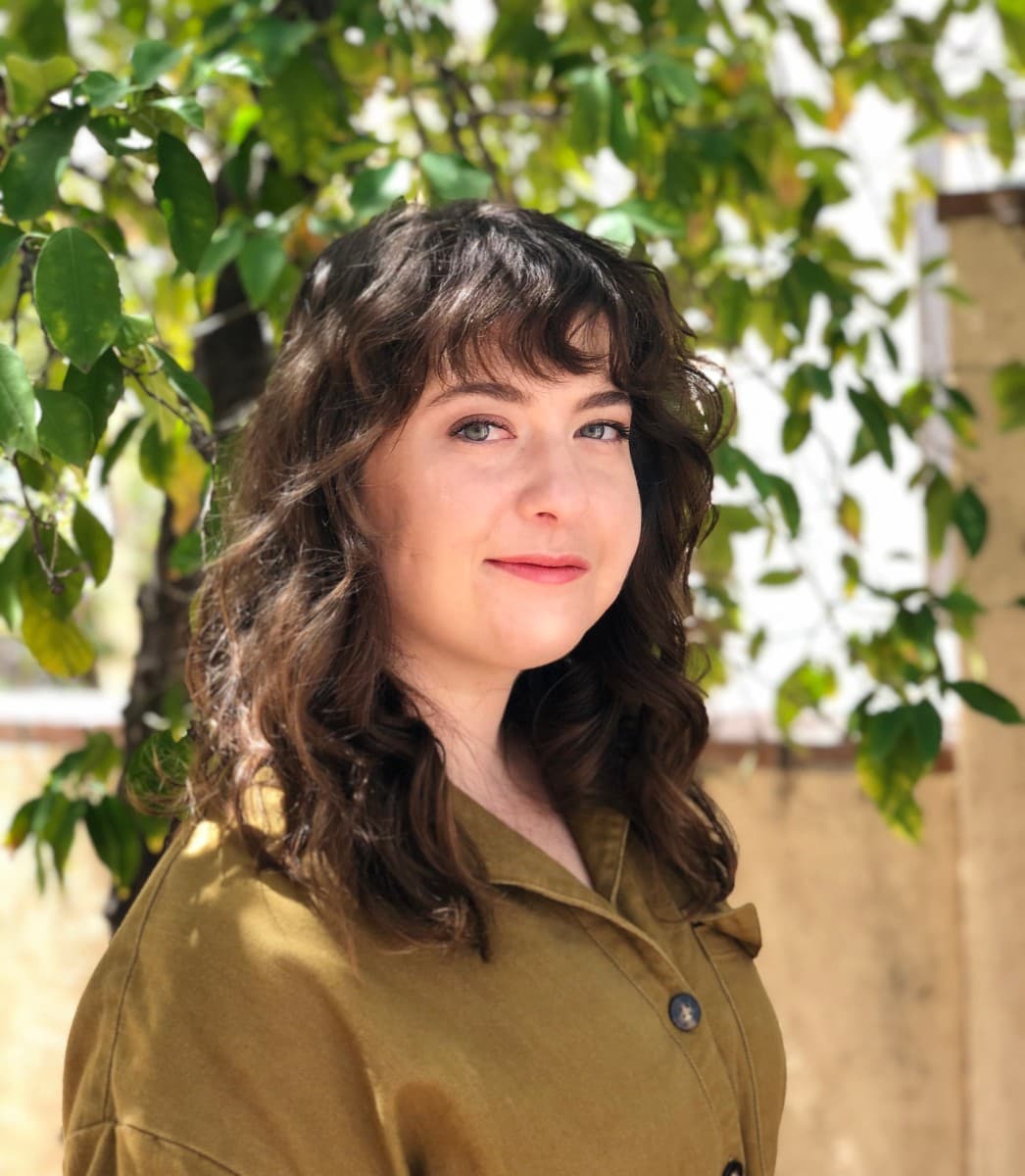
Dr. Rachel Rosenbaum is a design anthropologist specializing in cultural context assessments and human-centered design for architecture, planning, and institutional projects like embassies, civic buildings, and campuses. She translates ethnographic research and stakeholder insights into practical decisions on space planning, circulation, materials, community engagement, and art strategy. With a PhD and MA in Sociocultural Anthropology from the University of Arizona, she brings over a decade of applied experience from nonprofits, international development, climate tech, and government projects to bridge design intent with lived realities.
Professional Summary - From international development to design anthropology
My path to design anthropology started with a recurring problem: well-intentioned programs, products, and spaces consistently failed to meet their intended impact because they were designed without engaging with and learning from the people they are designing for. I’ve spent over a decade in applied research roles—from microfinance and human rights to climate tech and sustainability consulting—repeatedly encountering the disconnect between strategic vision and on-the-ground reality.
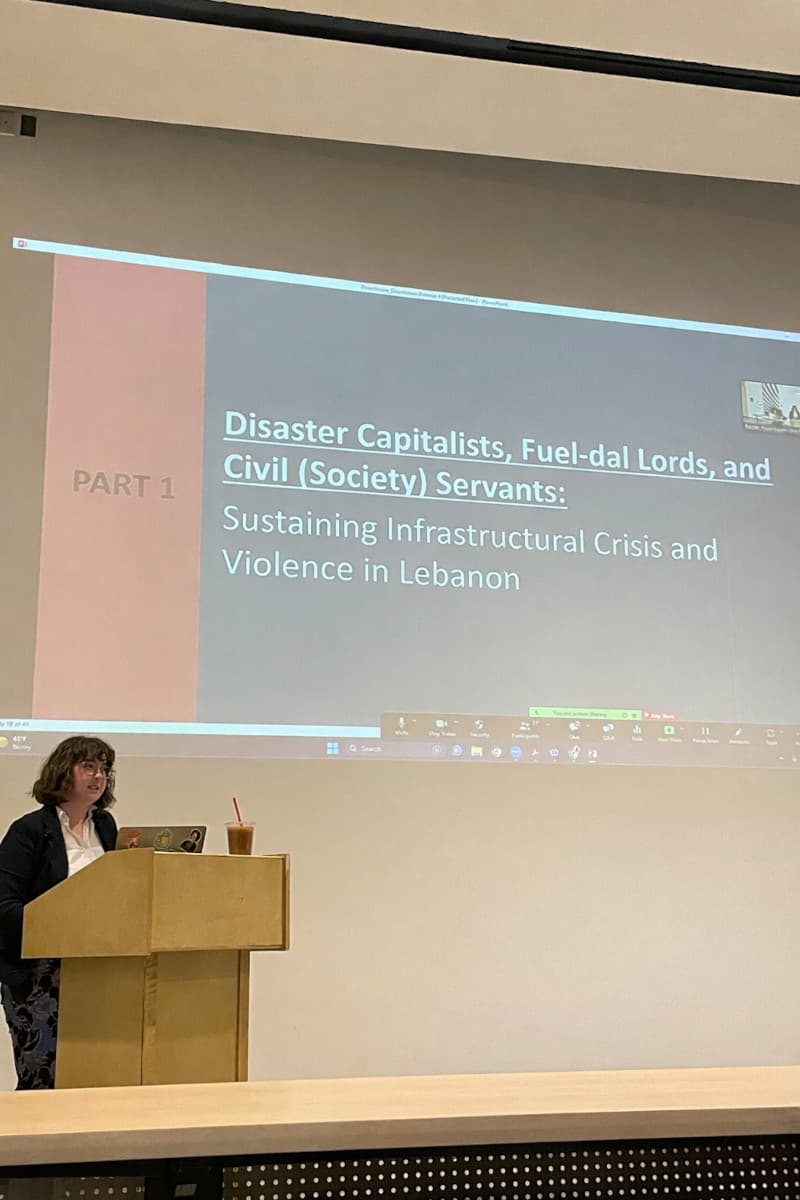
During my PhD at the University of Arizona, I spent two years in Lebanon researching infrastructural collapse—conducting extensive fieldwork with government ministries, international organizations, NGOs, and affected communities to understand how people adapt when formal systems fail. As Product & Research Director at Recycle Lebanon, I led multi-stakeholder initiatives that required coordinating between government agencies, UN partners, and local communities while managing research and development teams. This work in politically complex environments taught me how to facilitate collaboration across stakeholders with competing interests and translate research insights into frameworks that actually get adopted and implemented.
The shift to architecture happened when DS+R brought me onto a U.S. embassy project requiring cultural context assessment. They needed someone who could conduct ethnographic research with diverse stakeholders and translate those findings into specific design recommendations that the architecture team could actually use. The work brought together everything I'd been doing: deep cultural research, stakeholder engagement across government and community contexts, and the ability to bridge between human behavior and spatial design decisions. I founded Anthropology in Action to bring this approach to architecture and planning teams—helping them design spaces that work for real people, not imagined users.
Creative Summary - How art shapes my anthropology
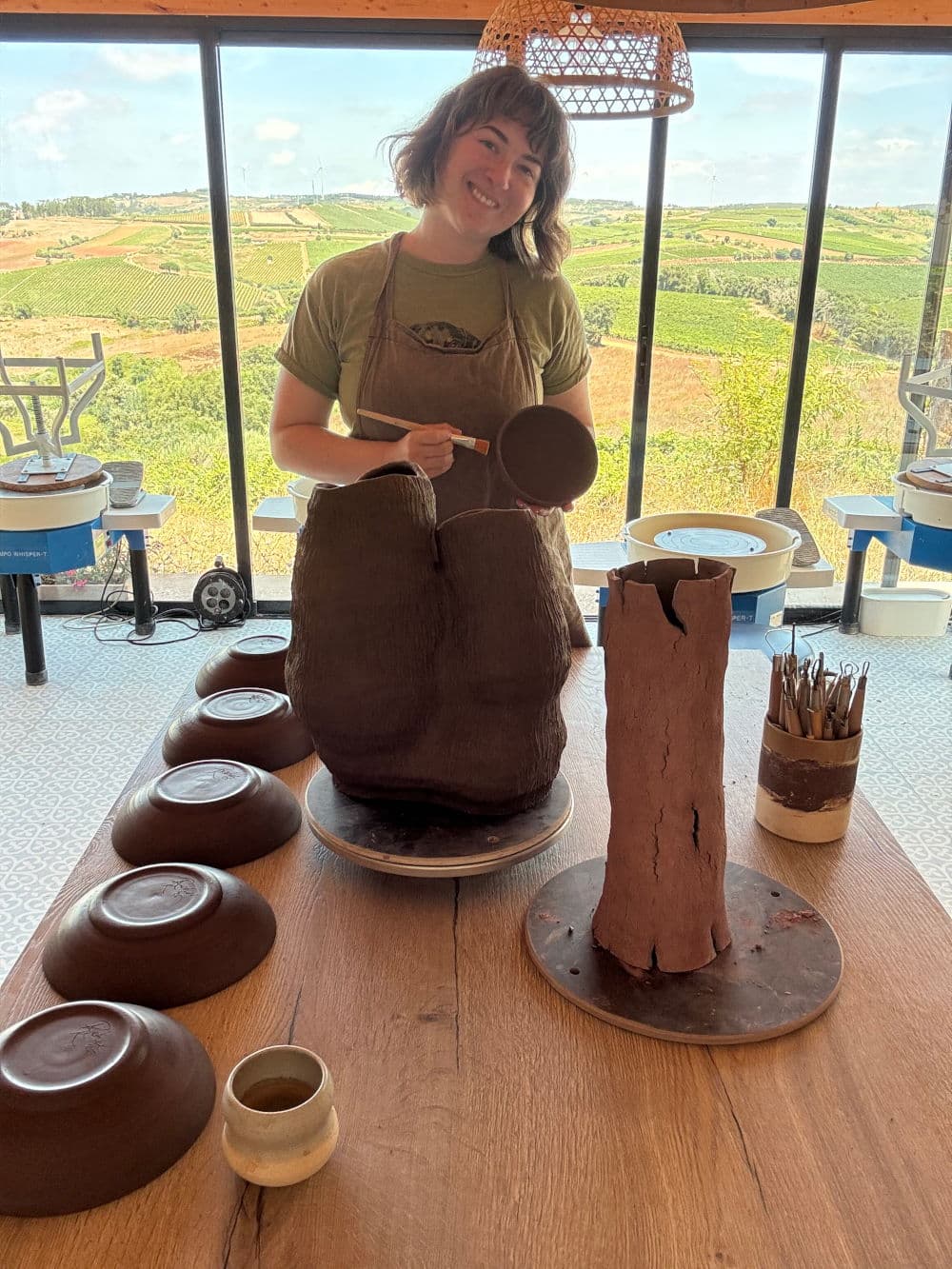
I'm also an artist. I trained in fine arts and run Rose & Bean Ceramics , a small ceramics practice where I work with clay, surface design, and color. This creative work isn't separate from my consulting—it's central to how I understand space, form, and atmosphere.
Working with clay taught me to pay attention to how objects feel in the hand, how glazes interact with light, how small shifts in form change interaction. That same sensitivity shows up in my anthropology practice: I think about how people will touch surfaces, move through thresholds, read symbols, and experience light, sound, and shade over time. I can lead art and cultural representation strategies on institutional projects where aesthetics are never neutral—connecting ethnographic insights to visual language, collaborating with artists and cultural institutions to ensure materials and artworks are grounded in place rather than decorative afterthoughts.
Core Values - These are the principles that guide how I work with clients, collaborators, and communities through Anthropology in Action
- Respect for human difference
I approach every project with the assumption that people experience space differently based on history, identity, and power. My work centers voices that are often excluded from design processes and takes a trauma-informed, culturally competent approach to engagement.
- Collaboration over extraction
I see my role as a partner, not a distant expert. I embed with design teams, co-create with community stakeholders, and build processes where cultural insights shape decisions, rather than appearing as a report at the end.
- Cultural and contextual depth
Context matters. I bring rigorous anthropological research—historical, political, environmental, and social—into each project so that design decisions respond to the realities of place and community, not generic assumptions.
- Rigor with practicality
I care deeply about methodological rigor, but I care just as much about usability. I translate complex qualitative research into clear frameworks, visuals, and design action items that teams can act on within real timelines and constraints.
- Transparency and accountability
I’m explicit about methods, limitations, and implications. Clients know what I’m doing, why I’m doing it, and how findings connect to risk, opportunity, and design decisions. I stay involved through implementation to help ensure insights don’t get lost.
- Equity in practice
Design is never neutral. Every project presents an opportunity to either reinforce or disrupt existing inequities. My aim is to support spaces and systems that enhance dignity, access, and care—especially for those who are most impacted and least heard.